Benefits of 3d Prenatal Imaging Benefits in Prenatal Care

Advances in medical imaging have transformed prenatal care, offering clearer insights into fetal development. Among these innovations, 3d prenatal imaging stands out for its ability to provide detailed, three-dimensional views of the unborn baby. This technology enhances the diagnostic process and supports expectant parents with valuable information. In this article, I will explore the key benefits of 3d prenatal imaging and how it contributes to better prenatal care.
Understanding 3d Prenatal Imaging Benefits
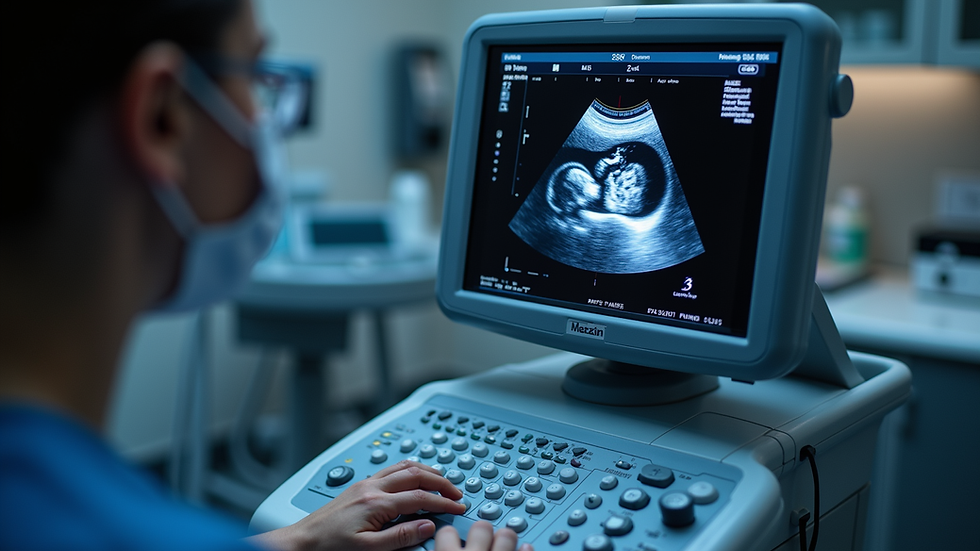
3d prenatal imaging creates a three-dimensional image of the fetus using ultrasound technology. Unlike traditional 2D scans, which produce flat, cross-sectional images, 3D scans offer a more lifelike representation. This allows for better visualization of the baby's features and structures.
The benefits of 3d prenatal imaging include:
Improved anatomical detail: The 3D images provide clearer views of the baby's face, limbs, and organs. This helps in identifying any abnormalities early.
Enhanced parental bonding: Seeing a realistic image of the baby can strengthen emotional connections for parents.
Better diagnostic accuracy: Doctors can assess fetal development more precisely, aiding in early detection of potential issues.
Non-invasive and safe: Like traditional ultrasounds, 3D scans use sound waves and do not expose the mother or baby to radiation.
These advantages make 3d prenatal imaging a valuable tool in modern prenatal care.
How 3d Prenatal Imaging Supports Early Detection
One of the most important roles of 3d prenatal imaging is in the early detection of fetal anomalies. The detailed images allow healthcare providers to examine the baby's anatomy thoroughly. For example, facial clefts, spinal defects, and heart abnormalities can be identified with greater clarity than with 2D scans.
Early detection is crucial because it:
Enables timely medical intervention or planning.
Provides parents with information to prepare emotionally and practically.
Helps in deciding the best course of care during pregnancy and after birth.
In some cases, 3d imaging can reveal subtle signs that might be missed on standard scans. This level of detail supports more accurate diagnoses and better outcomes.
Which is better, 3D or 4D ultrasound?
When considering prenatal imaging options, many wonder whether 3D or 4D ultrasound is better. Both use similar technology but differ in how images are presented.
3D ultrasound produces static three-dimensional images. These images show detailed views of the fetus’s structure and are useful for examining physical features and detecting anomalies.
4D ultrasound adds the element of time, creating real-time video of the fetus moving. This allows parents and doctors to observe movements such as kicking, yawning, or swallowing.
From a clinical perspective, 3D ultrasound is often preferred for detailed anatomical assessment. It provides clear, high-resolution images that are easier to analyze. 4D ultrasound, while visually engaging, is more commonly used for bonding experiences and less for diagnostic purposes.
Both types of scans are safe and complementary. The choice depends on the specific needs of the pregnancy and the information required by healthcare providers.
Practical Recommendations for Expectant Parents
If you are considering 3d prenatal imaging, here are some practical tips to make the most of the experience:
Schedule scans at the right time: The best window for 3D scans is usually between 26 and 32 weeks of pregnancy. At this stage, the baby has developed enough fat to show clear features, but there is still enough amniotic fluid for good image quality.
Choose a reputable diagnostic centre: Look for clinics with experienced sonographers and advanced equipment. This ensures accurate results and a comfortable experience.
Discuss your scan with your healthcare provider: They can advise on the timing and purpose of the scan based on your pregnancy history and any risk factors.
Prepare questions in advance: Use the scan as an opportunity to ask about fetal development and any concerns you may have.
Understand the limitations: While 3D scans provide detailed images, they are not a substitute for comprehensive prenatal care and other diagnostic tests.
By following these recommendations, you can benefit fully from the advantages of 3d prenatal imaging.

The Role of 3d Fetal Scans in Comprehensive Prenatal Care
Integrating 3d fetal scans into prenatal care enhances the overall monitoring process. These scans complement traditional methods by providing additional layers of information. For example, when combined with fetal anomaly scans and echo scans, 3D imaging helps build a complete picture of fetal health.
At Ashwin Scans, we prioritise high-quality, affordable diagnostic services. Our experienced team uses advanced technology to deliver accurate fetal anomaly and echo scans. Incorporating 3d fetal scans into our services allows us to detect potential issues early and support families throughout pregnancy.
The benefits of 3d fetal scans extend beyond diagnosis. They also:
Reduce anxiety by providing clear images and explanations.
Support informed decision-making for parents and healthcare providers.
Enhance the quality of care through detailed monitoring.
This technology is a valuable addition to prenatal care, helping ensure the best possible outcomes for mother and baby.
Looking Ahead: The Future of Prenatal Imaging
The field of prenatal imaging continues to evolve. Future developments may include even higher resolution scans, improved 4D imaging, and integration with other diagnostic tools. These advances will further improve the accuracy and usefulness of prenatal assessments.
For now, 3d prenatal imaging offers a reliable, accessible way to enhance prenatal care. It provides detailed insights that support early detection, parental bonding, and informed healthcare decisions.
Choosing a trusted diagnostic centre with skilled professionals and modern equipment is essential. This ensures that the benefits of 3d prenatal imaging are fully realised, contributing to healthier pregnancies and better preparation for birth.
By understanding and utilising the benefits of 3d prenatal imaging, expectant parents can gain valuable information and reassurance during pregnancy. This technology plays a key role in modern prenatal care, supporting both medical professionals and families with clear, detailed views of the developing baby. For those seeking reliable and affordable fetal scans, centres like Ashwin Scans in Ambattur offer expert services designed to meet these needs effectively.


Comments